
ELECTRIC PROPULSION FOR SMALL SATELLITES
Most systems make the satellite work around the thruster. Eos starts from the platform and the mission, developing high-efficiency electric propulsion that makes real manoeuvrability practical for small satellites.
A NEW APPROACH TO PROPULSION
The satellite industry is changing. Spacecraft are getting smaller, missions more ambitious and orbits more crowded.
Eos is developing electric propulsion from the other direction, starting with the spacecraft, the mission and the realities of integration, rather than asking the satellite to fit around the thruster.
THE PROPULSION CHALLENGE
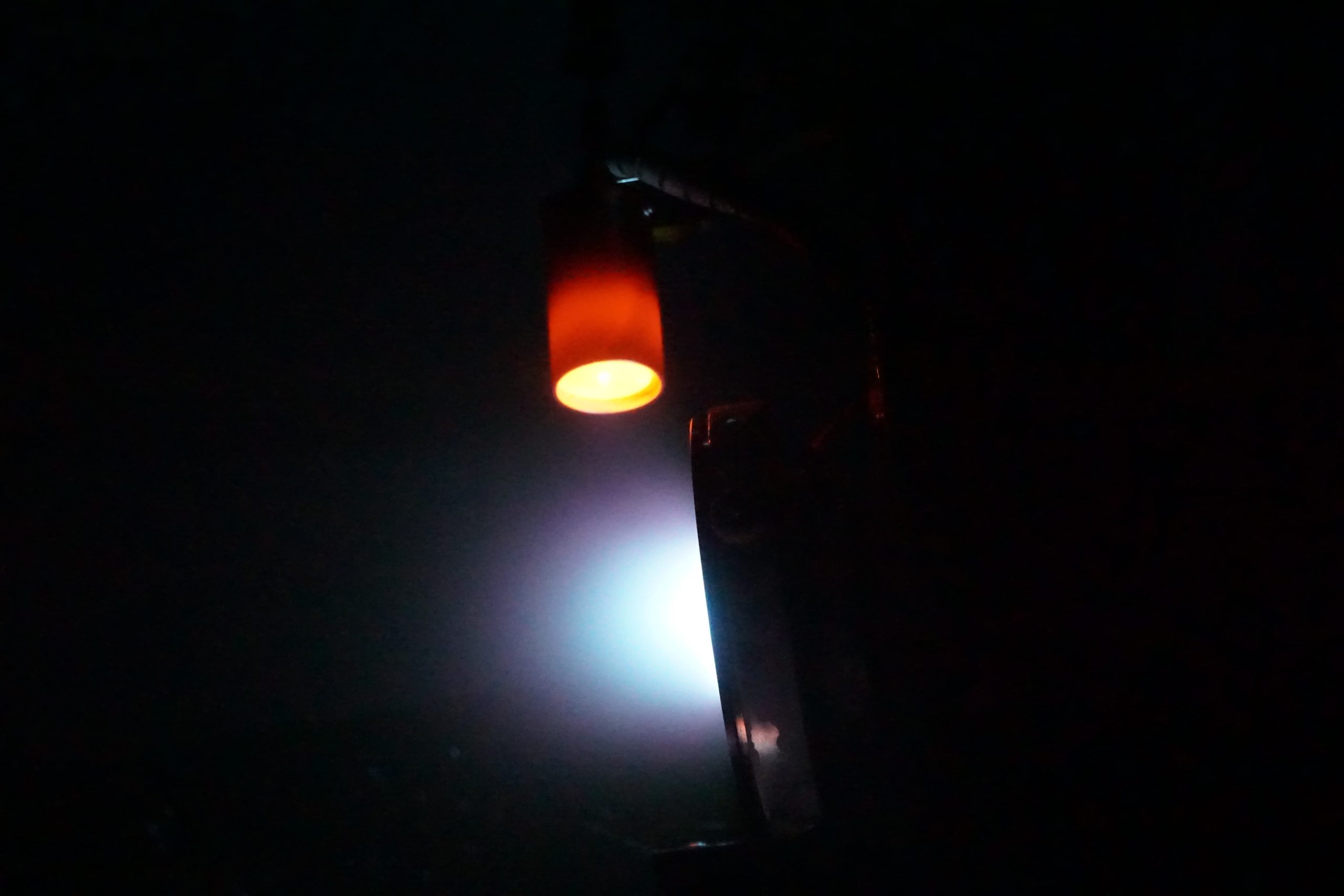
Advanced electric propulsion uses electromagnetic fields to accelerate propellant and generate efficient, controlled thrust for spacecraft.

Propulsion is often one of the hardest parts of building a spacecraft, adding time and complexity long before a mission reaches orbit.

On a small satellite, propulsion has to make sense commercially as well as technically. Cost and size matter as much as performance.

How long a propulsion system keeps performing decides how much a spacecraft can achieve once it is in orbit.

As orbits get busier and missions more ambitious, the ability to move, reposition and stay on station is essential rather than optional.
The technology
Lampos is Eos first product, a plasma propulsion system built for modern small-satellite platforms. It is designed around three things operators consistently need: a longer working life, higher manoeuvrability in orbit, and propulsion that is practical to buy, build and fit at scale.
Longer life in orbit
240mN
An erosion-free architecture and increased total impulse are designed to extend operating life, giving operators more mobility over a mission rather than a fixed, shrinking budget of movement.
Built to scale
Lampos is designed for mass-manufacturability, with shorter build times and better scalability than conventional approaches.

Fits existing platforms
It is packaged at a size similar to or smaller than a conventional Hall thruster, so it suits the spacecraft teams are already building.
THE TECHNOLOGY
Lampos is our first product, a plasma propulsion system for modern small-satellite platforms. An erosion-free architecture and increased total impulse are designed to extend operating life, so operators keep more mobility over a mission. It is built for mass-manufacturability, at lower cost and shorter build times, and packaged at a size similar to a conventional Hall thruster, so it fits the spacecraft teams already design.
The Eos Advantage
Eos Space Technology is developing compact electric propulsion for reliable small-satellite integration.
Small by Design
Built around the real physical constraints of small-satellite platforms.
Fits Existing Platforms
Packaged like a conventional Hall thruster, designed to fit the spacecraft teams already build.
Built to Last
An erosion-free architecture developed with operating life at its core.
High Performance
Engineered for capable propulsion inside a compact envelope.
Satellite Focused
Purpose-built for the needs of small-satellite missions.
Deep Expertise
Grounded in years of hands-on electric propulsion research.
About Us
Eos Space Technology was founded to rethink how propulsion fits into a fast-changing satellite industry. Based at Harwell Campus in Oxfordshire, we bring together propulsion research, product development and commercial thinking around a single aim: to make advanced propulsion a practical, enabling technology for the next generation of spacecraft.
Propulsion designed for extended operating life in orbit.
Greater manoeuvrability and flexibility during a mission.
Built to fit the platforms teams already design.
Designed for practical, repeatable manufacturing.
The Eos Vision
As satellites advance and space gets busier, reliable propulsion is crucial. Eos is developing electric propulsion for small satellites to operate and complete demanding missions.
More control and flexibility during a mission.
Technology designed to support the growing needs of the satellite industry.
PROVEN THROUGH ENGINEERING
Eos is built on deep technical expertise, academic research and hands-on propulsion development.
As the technology progresses, we believe credibility should come from what can be demonstrated: engineering data, testing, validation and real programme milestones.
Research
Technical knowledge grounded in propulsion research and specialist engineering expertise.
Progress
Building the technology, partnerships and commercial foundations required to move from advanced engineering into operational missions.
Partnerships
Working within the UK and European space ecosystem alongside research, industry and institutional partners.
Testing
Development supported by structured testing and performance validation.
THE TEAM
Bringing together technical expertise, innovation and a passion for solving complex space challenges.
CEO and Co-Founder
Szymon is the CEO and co-founder of Eos Space. With 5 years in spacecraft propulsion research at the University of Southampton, he now leads the development of next-generation propulsion technologies.
CTO and Co-Founder
Tom is the CTO and co-founder of Eos Space, having also worked as a postgraduate researcher at the University of Southampton. Having previously worked on developing alternative-propellant Hall Thrusters, he is now ready to push the boundaries of Hall Thruster technology.
COO and Co-Founder
Moe is the COO and co-founder of Eos Space Technology, with previous experience as a postdoctoral researcher as well as working as a start-up salesperson. Moe is now helping Eos reach out to customers, tackling the real problems satellite operators currently face.
Eos Space Technology was founded to rethink how propulsion fits into the rapidly changing satellite industry.
Based at Harwell Campus in the UK, the company brings together technical research, product development and commercial thinking around one ambition:
to make advanced propulsion a more practical enabling technology for the next generation of spacecraft.
Small satellites are taking on more sophisticated roles across communications, Earth observation, science and infrastructure. As they do, propulsion stops being just another component and becomes an enabling layer.
Eos exists to make manoeuvrability, mission flexibility and longer spacecraft life more accessible to the platforms that will shape the next era in orbit.
FOR INVESTORS
Eos is developing high-lifetime, high-manoeuvrability propulsion to enable more capable satellites and greater freedom of movement in orbit.

An expanding small-satellite economy is creating steady demand for more capable spacecraft.
Incubating in ESA-BIC, backed by ESA and UKSA funding alongside world-class space investors.
Eos is progressing through development and testing while laying the commercial foundations for what comes next.
Deep R&D and product-development experience applied to real spacecraft requirements.
FAQS
Eos Space Technology develops propulsion systems designed to give satellites greater mobility and longer operational capability in orbit.
Eos is solving the challenge of efficient spacecraft movement by developing propulsion systems that deliver greater performance, precision, and operational flexibility while reducing propellant requirements.
Eos electric propulsion uses electromagnetic fields to accelerate charged particles and generate thrust. This enables efficient, precise spacecraft manoeuvring.
Lampos is designed for a longer working life through an erosion-free architecture and increased total impulse, and for practical, scalable manufacturing at a size that fits existing platforms. The aim is more mobility over a mission, at a cost and form factor that make sense for small satellites.
Eos propulsion systems are designed to support a wide range of missions, including orbit raising, station keeping and constellation management.
Eos builds for satellite operators, spacecraft manufacturers, and mission teams that need reliable, efficient propulsion for demanding orbital applications.
Whether you are an experienced space tech investor or just entering the world of space tech, talk to our team to find out more about Eos and where the space economy is heading.

SPACE PROPULSION EXPERTS
Discover satellite propulsion tech with Eos. For next-gen propulsion, mission support, or partnerships, our team is here to assist.
We aim to reply within one working day.